Tips on cut cost when buying led grow lights

Many indoor grow fans like to buy led grow lights to supplementary sun for the plant. However, they didn’t know which kinds of led grow lights is suitable. Many people will consider the shipping fee and the grow lights price. So, it is time for us to teach you how to choose the led grow light in low price. One thing we must know low price is not equal to low quality, we should found low price with best quality product.

Using the search engine

Most website will give information to buyer that they’re free shipping or they have discount on selling led grow lights.
Step 1.
We can go to the google.com, and type “free shipping led grow lights”, then we search some great product which price is avaliable. OK, let’s go to the next step.
step 2.
Enter “led grow lights for sale”, many website will use this title to attract people who search in google.
OK, we record it the price we like.
step 3.
After such keyword as follow, we general know which product suit for our demand. Hold on, don’t order so early. We can do more search in google. For example, we want to buy SP110D 140w grow light. We can use the google and enter” sp110d 140w grow light for sale/ free shipping”, then we can found more useful information from the search. Maybe we can found the product in best price and free shipping. It will save you lot of money.

Go to B2C or B2B platform

If you worry about the security of buying product online, we can choose the authoritative shopping platform such like Dhgate.com, alibaba.com and msledstore.com.

Dhgate

Dhgate.com is a B2C platform which sell all kinds of products.
Advantage – Most kinds model grow light you can choose
Disadvantage – It not professional on grow lights.

alibaba

Alibaba.com is a B2B platform which also sell all kinds of products.
Advantage – You can get the best price in here when contact with the supplier
Disadvantage – Many supplier ask you to buy more than one piece of it.

msledstore

Msledstore.com is a B2C platform which selling Bysen grow lights.
Advantage – This is a professional platform on selling led grow lights
Disadvantage – The price is little expensive.

So,after doing such job, can you found the best grow light for yourself? If so, leave the comment and let me know. We will do more helpful information for all of you.

Thanks.

The Secret of Fast Grow Indoor Plant

Have you has an awful grow plant indoor experience? Such like the plant does not grow, the internodes (spaces between the leaves) on the new growth are much longer than the internodes on the older part of the plant, the new leaves are smaller than the older leaves, the leaf color is a lighter green on the newer foliage than on the older foliage, the older leaves are dead. I think you suffer at least one of them.

Want to know the secret of grow plant success? Yes, it sounds like nonsense. Today, we bring this great welfare for you.

Here is several factors of decide how to success in grow indoor plant

Light

Of all of the factors affecting plant growth in indoor, sufficient light is by far the most important. Light is needed for plants to produce food and survive — generally, the more light available, the more food produced for growth. Light is measured in units called foot candles. One footcandle (ft-c) is the amount of light cast by a candle on a white surface 1 foot away in a completely dark room. Outdoors, the light levels on a bright day range from 10,000 ft-c in an open sunny area to 250 ft-c or less in the shade of a large tree.

It is very helpful to have a general idea of how much light is present in a given location in your house. You can get a fairly good estimate with a handheld light meter, or you can use a 35 mm camera and do the following:

  • Set the film speed indicator to ASA 25 and the shutter speed to 1/60th second.
  • Place a piece of white paper where you want to measure the light levels, aim the camera toward the paper close enough to fill the view, and adjust the f/stop so that the meter indicates a correct exposure.
  • Read the approximate light level from Table 1.

Table 1. Indoor light levels and appropriate f/stop settings

f/stop Setting

Light Level

f/2

40 ft-c

f/2

75 ft-c

f/4

150 ft-c

f/5.6

300 ft-c

f/8

600 ft-c

f/11

1,200 ft-c

f/16

2,400 ft-c

With the help of this table, you can obtain the light intensity reading from anywhere in your home. For example, if the f/stop setting is f/16, the approximate light level is 2,400 ft-c.

Using the light readings, your home can be divided into four areas, which have the following light levels for 8 hours per day:

  1. Low-light areas: 25 ft-c – 75 ft-c
  2. Medium-light areas: 75 ft-c – 200 ft-c
  3. High-light areas: over 200 ft-c but not direct sunlight
  4. Sunny light areas: at least 4 hours of direct sunlight

In your home, the amount of light in a given location is variable — it is affected by the presence of trees outdoors (may shade at certain times), roof overhangs (may shade at certain times), wall color (reflectance), window curtains, day length, time of day, and time of year.

When shopping for indoor plants, select plants for a given location based on the approximate light levels in the spot. The plant’s label will usually contain information on the light requirements of the plant. If the plant label lists “high light” but the selected area in the home does not provide adequate light, artificial light sources such as fluorescent and/or special incandescent lights may be used to supplement the natural light.

Increasing the number of hours of light exposure can also help—for example, 16 hours of light and 8 hours of dark. This extends the number of hours during which plants receive light.

While adequate light is crucial for plant growth, too much light can be damaging (Figure 1).

Indoor plants are classified according to the amount of light needed for growth. (A list of plants and their light requirements is provided in Table 3.) Look for this information in general terms on the plant’s label:

  • Low: minimum 25 ft-c – 75 ft-c, 75ft-c – 200 ft-c for good growth
  • Medium: minimum 75 ft-c – 150 ft-c, 200 ft-c – 500 ft-c preferred
  • High: minimum 150 ft-c – 1,000 ft-c, 500 ft-c – 1,000 ft-c preferred
  • Very high: minimum 1,000 ft-c, 1,000+ ft-c preferred

Windows with eastern exposure within the home generally provide the best light and temperature conditions for most indoor plant growth because plants receive direct morning light from sunrise until nearly midday. Footcandle readings at these windows can reach 5,000-8,000. As the morning progresses, the direct sun recedes from the room.

An eastern room is cooler than southern or western rooms because the house absorbs less radiant heat. Light from the east is cooler than that from the south or the west, and thus it causes less water loss from the plants.

Windows with southern exposure give the largest variation of light and temperature conditions. The low winter sun shines across the room for most of the daylight hours.

In the summer, when the sun is farther north than it is in the winter, the sun rises at a sharp angle in the morning and is high in the sky by noon. Direct light comes into a south window only at midday. If there is a wide overhang covering the windows outside, the sun may not enter the room at all. The sun at noon on a summer day may measure 10,000 ft-c. Indoors, however, a southern window with wide eaves on the outside will receive about the same amount of light as a window with northern exposure. Southern and western exposures are interchangeable for most plants. In the winter, most plants, except those with definite preference for northern exposure, can be placed in a room with southern exposure.

Windows with northern exposure provide the least light and the lowest temperature. Because the United States is in the northern hemisphere, it receives most of its sunlight from the south. Out of the four exposures, the northern exposure receives the least light and heat year round.

Because of the low-light levels, maintaining healthy plants can be a challenge. A northern windowsill can measure light levels as low as 200 ft-c on a clear winter day, which is optimal for some plants, such as the African violet. This exposure is best for plants with green foliage because the coloration on variegated foliage tends to disappear under low-light conditions. Although most plants grown indoors will not grow in a northern room, they may tolerate it for short periods of time.

Seasons change the amount of natural light entering through windows. For example, the summer sun reaches a higher zenith compared to the winter sun (Figure 2). Therefore, sunlight penetrates farther into a room during winter.

So much work, right? If you want to grow indoor plant easy, you may need to buy led grow lights.

Temperature

Temperature is the second most important factor influencing plant growth in interior environments. People feel comfortable in the range of 72 degrees F-82 degrees F, and interior plants can tolerate and grow well in the 58 degrees F-86 degrees F range because most indoor plants originate from tropical and subtropical areas of the world.

Temperature and light are linked through the processes of photosynthesis and respiration. These processes can be thought of as the “yin and yang” of plant life — two parts of a circle. Photosynthesis builds sugars and starch, which are then broken down by respiration to provide energy for the development of new tissues (growth) and the maintenance of existing ones. High temperature speeds up respiration. If the plant is not producing sufficient sugars (as under low light), then high temperatures may break down what little sugars are made, leaving little to none for growth. Maintenance takes precedence over growth; therefore, under insufficient light, plants do not grow. If light is so low that sugars produced are insufficient for maintenance, the plant eventually dies.

When sugar levels are low, the plant takes nutrients and sugars from older leaves to maintain new leaves. To help plants in an indoor environment, two options are available: (1) raise light levels to increase photosynthesis and sugar production or (2) reduce night temperature to lower respiration rates and allow more sugars for growth.

What temperatures are likely to occur in homes? During the summer, air conditioning that may have been turned off at night or weekend thermostat settings that may have been raised result in higher than desirable night temperatures. During the winter, heating that may have been turned off at night or weekend thermostat settings that may have been lowered may result in lower night temperatures. Be especially careful not to allow temperatures to drop below 50 degrees F, or chill damage will result on some sensitive foliage plants (e.g., Chinese Evergreen, Aglaonema). Chill damage is manifested with the yellowing of lower leaves and/or defoliation.

Plants vary in their minimum and maximum temperature requirements. Examples of cool-loving plants suitable for locations where temperatures drop to the low 50s at night and 60s during the day are Cyclamen, Wonder Plant, Fatshedera, Japanese Aralia, and Fatsia.

Not all interior plants have the same temperature requirements for optimal growth. For example, Cast Iron Plant, Aspidistra, and ferns actually grow better with cooler temperatures (72°F), while other tropical plants grow best if the temperatures are 90 degrees F – 95 degrees F. Such temperatures are rarely allowed indoors.

The best temperature range for indoor plants is 70 degrees F – 80 degrees F day and 65 degrees F – 70 degrees F night.

Relative Humidity

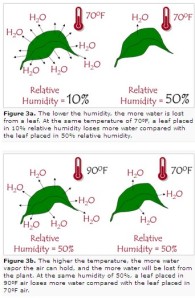
Relative humidity is the amount of moisture contained in the air. For interior plants, relative humidity below 20 percent is considered low, 40 percent – 50 percent is medium, and above 50 percent is high. Relative humidity is a very important factor, but it is easily overlooked. In a greenhouse, relative humidity is 50 percent or higher. Rapid transpiration and water loss may result when newly purchased plants are placed in the 10 percent – 20 percent relative humidity typical of most homes (Figure 3). Most indoor plants come from the tropics where high relative humidity is common. Therefore, take the following steps to help your plants adjust to the low relative humidity in your home.
h20

  • Place plants close together to create a microenvironment with a higher relative humidity.
  • Use a shallow container filled with water and lava rocks or gravel, which will provide evaporation from a large surface area and increase relative humidity.
  • Use a humidifier.
  • Use mist bottles to spray water around the plant; however, in reality, you would need to mist every few minutes for an indefinite amount of time to make a difference in relative humidity around the plant.
  • The foliage and flowers of plants with hairy leaves should not be sprayed with water. Water on such leaves may stay longer, providing opportunities for disease spores to germinate.

Water

Water Quantity

Learning to water is one of the most important skills in plant care. Applying too much water can suffocate plant roots and too little water causes growth to become erratic and stunted. Watering frequency will depend on the conditions under which the plants are growing. When dealing with how much water to apply, consider the following:

  • Plant type: A list of plants and their moisture requirements is provided in Table 3. Not all plants are similar in their water requirements. This information, along with the light preference, is usually included on the plant label. For example, a croton, which prefers high light, will likely need more frequent watering compared with a succulent plant such as Opuntia cactus. Both have similar light needs but dissimilar water requirements.
  • Plant size: Larger plants need more water compared to smaller plants.
  • Container volume: If the growing container is too small, watering may be required more frequently.
  • Soil moisture: The amount of water already present in the growing medium will also affect your watering frequency.
  • Light intensity: Plants under high light transpire more water compared with plants under low light.

Improper watering causes many problems. Containers with saucers may cause an excessive build-up of soluble salts (from the applied fertilizer). High levels of soluble salts can cause damage to plant roots and a decline in growth. Discard any water that had drained in the saucer after irrigation, and apply large quantities of water to the soil to leach the accumulated soluble salts. In deciding when you should water, feel the soil by pushing a finger an inch or so below the surface. If the soil is still moist, no further water is needed. Water devices or water meters are also available to simplify watering.

Water Quality

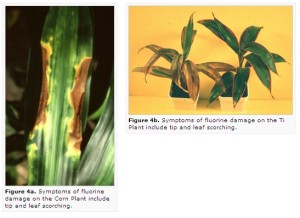
The quality of the irrigation water is an issue with plants that are susceptible to fluorine and chlorine, such as Corn Plant (Dracaena), Ti Plant (Cordyline), Peacock Plant (Maranta), and Rattlesnake Plant (Calathea) (Figure 4). Alleviate this problem by letting the water stand for several days — so that some chlorine and fluorine will be released from it — before applying the water to the plants. Move susceptible plants away from the edge of the pool to prevent water splashes from reaching the foliage. Do not use susceptible plants around enclosed pools. In general, plants with long linear leaves (such as the Spider Plant) are more susceptible to fluorine.
soil

Nutrition

Many indoor gardeners have the same problem with fertilizer that they have with water — they want to give their plants too much. Danger from over-fertilization occurs because any fertilizer used, whether in liquid, powder, or tablet form, will dissolve in soil water and will form salts in the water. When you over-fertilize, the water in the soil becomes so salty that it “burns” the plant’s roots by removing water from them (Figure 5). Excess soluble salts accumulate as a whitish crust on the surface of the growing medium and/or near the rim of the container.

Figure 5a. Soluble salt burn is manifested as leaf martinal and tip burn. Dead roots also invite root diseases.

Figure 5b. Soluble salts can burn roots; notice that the healthy roots are white, while the dead roots are brown. Dead roots also invite root diseases.

Before feeding plants, consider the following:

Plant type: Some plants are heavy feeders (e.g., Ficus species), while others need little or no additional fertilizer for months (e.g., succulents).
Volume of soil: The growing medium that is present — smaller pots require less fertilizer compared with larger pots because they contain less soil.
Light intensity: The higher the light levels, the more nutrients needed for plant growth.

A newly purchased, healthy plant rarely needs an immediate application of fertilizer. In most cases, the amount of fertilizer applied by the commercial producer will supply enough nutrients for two to three months in the home. This rule is flexible — if deficiency symptoms are evident, fertilizer application is desirable.

The secret to fertilizing plants indoors is to apply small amounts of fertilizer as the plant grows. Without new growth, the plant has a limited need for more fertilizer. During the winter when light levels are low, a plant’s need for fertilizer reduces. During the summer when light levels increase and the plant is actively growing, its need for fertilizer increases. As a starting point, use about one-fourth the label rate for monthly applications. If the overall plant color becomes lighter green, fertilize every two weeks. If the new growth is dark green but the leaves are small and internodes seem longer than on the older growth, decrease the fertilizer rate.

Varying fertilizer formulations are available to the indoor gardener. Many fertilizers come in specially designed formulas for indoor plants. Generally, they contain a lower percentage of the required mineral elements to prevent over-fertilization problems.

Soil/Growing Medium

The growing medium provides anchorage, water, and minerals. When repotting plants, make sure that the new mix is well drained and aerated, holds water and nutrients well, and is within the right pH range (5.0-6.5). A good potting mix provides ample amounts of oxygen to the root system. Most professional mixes are good to use. Some plants require special mixes, e.g., bromeliads, orchids, and African violets. Either purchase these mixes or prepare your own. Below are some formulas that can be used to prepare a homemade potting mix.

Ok, now we know the factor of effect indoor grow plant. We can refer those factor to grow plant. You will success in next time.


Which grow lights brands is the best

People who grow plant indoor always need a professional led grow lights. But which brands is the best for us? We never know it. But, today I collect lot of people’s opinion in which brand is suit for use.

Bysen Lighting
Advantage:
Bysen is a top of great brand in led grow lights, they produced helios, chloroba, x2 etc series. Both series grow light have great performance, especially chloroba c2. although Bysen is a China brand, we all know that people always think China product is poor quality and cheap price.

Disadvantage:
Bysen is China company, the grow light is very heavy, so the shipping fee is add to this product. So, the price is not as great as wonderful

Bluesea lighting
Bluesea lighting is not so famous in grow light industry, but it famous on led commercial lighting. So, when hear bluesea lighting product grow light, I was very surprised.
Advantage:
Bluesea lighting has mature led lighting production technology, the led grow lights product can be trusted. It coporated with famous led spectrum chip company, so the quality is great.

Disadvantage:
So, did you think bluesea lighting is cheaper than Bysen? No. Bluesea lighting maybe use the most high-end material, so the price is little expensive than Bysen. However, what’s moeny you pay what’s product you get. I always believe this theory.

Tips on Buying Indoor Grow Lighting

As a professional grower, you will know that light a basic element of indoor garden from some green thumb. Due to growing plants indoors receives almost no natural sunlight , it is necessary to provide artificial light for them to grow up to you for them. As you probably already know that plants use light to produce all living creatures is a form of energy called glucose and oxygen. This process, known as photosynthesis, and overall health is essential to the development of a plant . If you are considering buy led grow lights, I recommend you read follow tips:

What type of grow light should I choose ?

Due to recent technological advances , the gardener , and now gives several different options when it comes to plant growth lights. Three plants grow lights for indoor garden is the most common type of fluorescent lamps, high intensity discharge (HID) and light emitting diodes (LED). So , which one is the best to use in a garden ? LED grow lights must be from a particular wavelength spectrum , which is a unique benefit , often result in a larger , healthier plants ability to generate light . In addition , LED grow lights last longer ( 50,000-60,000 hours) and parkour . You can touch the LED Grow Light has been running for a few days, it will still feel cool.

It is important to note that due to LED Grow Light Parkour , you can crown your plants closer to placing them. This is a common mistake gardeners to place them too close to their grow lights burned their factories. Thankfully , however, this is a LED grow lights are not met because of a problem they never heat up . Of course , this is just of the many reasons why so many experienced indoor gardeners choose them over other types of lighting .

Use reflective
Whether you intend to use what type of plant growth lights, you should have a high -quality reflective praise it . While a single good LED lights will probably be enough to supply your plants have adequate lighting to grow, you can use reflection to stimulate their growth. These grow lights are used in conjunction with a simple device . Once connected , the light reflecting area surrounding the rebound , the plants with a greater amount of light.

Dark Ages
On the contrary, some people may think , let your plants too much light can actually have a negative impact on their growth. You have to remember that in wild plants is used to receive sunlight and darkness , so you want to imitate you grow 10 tons of these conditions or growth. Light and darkness exact amount will depend on the type of plants you grow varies . If you have not already done so, find out what your specific plant requirements for how much darkness . You can then place your plant growth lamp timer so your garden will give darken automatically after a given amount of time.

Best LED light search 2014

As you all know, the LED lighting craze is still in ful effect now. We see numerous new LEDs released almost at a monthly basis and they make astounding claims of “our brand is better than other one” or the infamous: “better than HPS”. But with all these companies claims is ture? I see alot of complaints. People not getting the promised PAR, units using cheap parts and chipsets, faulty units losing half their array in a period of months (most sites claim the LEDs have a lifespan of 50,000 hours) and of course, clone units.

I have been researching LEDs since last year and have found what I believe to be the best on the market right now. My question to you is: which one would YOU choose and WHY? Heres the list :

1.255W ChloroBA C2 LED Grow Light
The Chloroba C2 is the most poplular product in 2013, and it still become the great search grow light in 2014. They have astounding PAR and have the ability to grow lovely, dense flowers flooded with crystals. The only drawback is the price is steep (as with most quality LEDs) but i would need either one of these or two of the next size down to accomidate my space. Still a beautiful light and the company seems very helpful in dealing with customer’s needs.

2.California Lightworks Products : SolarStorm
The Solatstorm is IMO the “king” of LED lighting. Why? Because it uses 5W chipsets. Most great LEDs use 3W chipsets but this one uses 5W. Also, the heat sinks, overall design and addition of UVB t5 lighting make this beast quite LED. California Light Works really raised the bar with this unit. Ive only seen one userwho uses these LEDs but he swears by them and their company and i trust “the dude” (his name i cant remember how to spell so just going off of AVI). The only drawback i can think of is that its a little taller than most units in its class which really isnt a horrific drawback at all unless you have a very limited amount of space. This light is just such a tank amd seems very well built and engineered from the inside out.

3.Cree Chips Helios H158D Grow Lights
The Helios series still popular between growers. H158D is became the most popular model with high quality cree chips and the professional design. And this model is suitable for many people who just need little light cover.

All of these led grow lights incorperate 3W chipsets or higher. They are all around $1000-1,300 and all seem to use quality parts. I’m not sure if I would go with anything else as alot of LED panels and UFOs just dont cut it in comparison to these three. If you have any LED lights you are willing to share or post info on then be my guest but we are looking for quality here. I hope this helps anyone in the same conundrum as myself and i cant wait until i can get a hold of one to run test with.

Thanks for reading and happy new years 2014.

Several Tips To Choose Hydroponics Plants Light

What we more concern about the hydroponics plant light? And What is the most improtant factor about it? Let’s check it out!

Grow Lights Area Cover

When we shopping LED grow lights, the area cover is the improtant factor that we should consider. We must combine with  the acreage and Calculate how light area cover we actually need. Here is some formula about how to calculate the led grow light area cover:

Width x Depth = Square Feet

Watts x Square Feet = Desired Wattage

So, you may ask me why this formula is calculate the watts?  Yes, the watt is affect the area cover, the first we need to do is figure out how many wattage we need, then we will know the light of area cover we can get.

How about the price? Hps seems cheaper than LED Grow Lights

With the LED Grow Light come out, most people choosing the LED product. However,  LED grow light is most expensive than HPS, why people still choose it? The reason is LED grow light save more energy than HPS, if you use the HPS for a long time you will find that the energy cost is far greater than LED. So, if you are the professional grower, we suggest you forget about the HPS. The price of grow light can be found in Msledstore.com

Which Reflector Should I Get and Why?

The reflector is the most important part of a grow light. This will be the deciding factor in the amount of light reflected upon the plants and how uniform the light is. You want to have an even distribution of light over the entire growing area. Horizontal reflectors are the most efficient reflectors and are the most popular. A horizontal lamp position increases light up to 40 percent over a lamp burning in the vertical position. Smaller reflectors reflect light at a higher intensity because the light does not have to travel as far before it is reflected. Then you must factor in the size and shape of your garden. For those people who have a large garden with low light plants the larger reflectors may be a better choice.

Why Using Hydroponic Greenhouse Systems to Plants ?

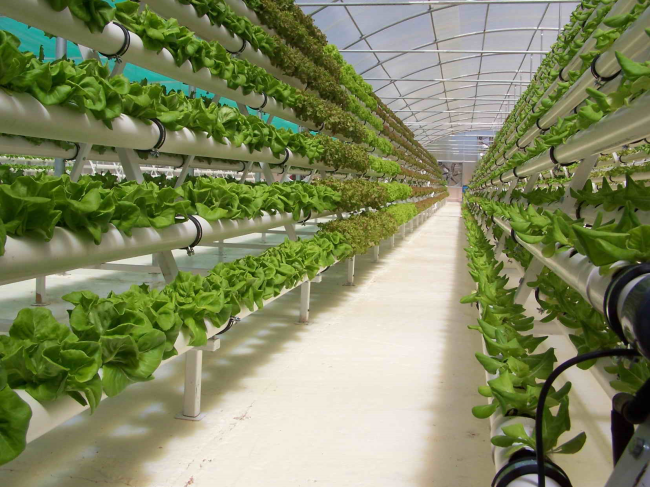
The plants, which are usually grown in shallow trays, are supported by an inert growing medium such as gravel, mineral wool, or perlite. Greenhouse is an ideal place for hydroponic gardening.

Image

It is rather a good idea to use hydroponic greenhouse systems to cultivate plants . It becomes much easier to take care of all the means and requirements involved for an indoor hydroponic garden to thrive. One can control all the fundamental factors like lighting and aeration, and the environmental temperature. Additionally, a lot of space is needed to set up the watering and lighting systems for hydroponic gardening. One can place these systems exactly where they should be kept. This is a critical factor in hydroponics, since the supply of water and lighting is more important than in a conventional garden.

— The biggest advantage of hydroponic greenhouse systems pertains to lighting. Hydroponically cultivated plants require an appropriate amount of lighting. With hydroponic greenhouse systems, daylight is naturally cleansed and filtered away. It is also possible to manage the amount and direction of the light that enters the greenhouse through shutters. Moreover, much less energy is utilized since there is hardly any need to keep the led grow lights burning continuously.

— With hydroponic greenhouse systems, the process of supplying nutrients to the plants is very simple and easy to manage. This is an important point to consider, since a well growing hydroponics garden, need an appropriate supplement for soil. Since hydroponics does not involve soil, the pH levels of alkaline and acids may vary considerably, since they all rely on the quality of the water that they are dissolved in. With hydroponic greenhouse systems, one is able to set up an automatic pH controller so that there is no need to regularly check the level of pH.

— Maintaining the environmental temperature in hydroponic green house systems is also rather critical. Even when the climate is chilly, a well built greenhouse will maintain the appropriate temperature, and it would not be necessary to use a heater. If one resides in an area where the climate is cold, yet there is plenty of sunshine, it is best to use a hydroponic greenhouse system. One may also install fans and ventilators to aid in maintaining and regulating the temperature in the greenhouse.

While there are a variety of hydroponic greenhouse systems available for purchase, one can construct a self-made system as well, right from scratch. There are several kits available in various sizes and designs, and some of these will also make it possible to increase the size of an indoor hydroponic greenhouse system. It’s well considering then to get a valuable structure for an indoor hydroponic garden.

Tips on grow plant indoor

Image

Because the weather or other reason, people need to grow plant indoor. While, grow plant indoor not an easy job, you need to think something like: room to grow, right temperature, light, water, air and nutrients.

Room for grow plant

The above ground portions of the plant need space so leaves can expand and carry out the job of making food. Roots also need room to grow. Plants growing in small spaces will have their roots crowded, and that results in smaller amounts of growth.

Temperature

Most plants like temperatures that most humans like. Some may like warmer temperatures while others may prefer cooler temperatures for best growth. It is always good to know where plants come from so you can make them feel at home. Most plants like to have cooler temperatures at night and don’t like to be in a drafty spot.

Light

Plants grown indoors like bright light. Windows facing the south or west have the best light. Try to place the plants close to the window to take advantage of all the light. The further away from the window, the darker it becomes. A plant will tell you when it isn’t getting enough light, because its stems will be thin and it will lean toward the light. If you don’t have a bright window, try using grow lights. Remember to have the light about six inches above the plants and leave it on for 14-16 hours each day. If you have no such Condition to bring light, you may consider about led grow lights.

Water

Water is important in the plant’s ability to make and move nutrients. Without water or with too much water, a plant dies. For this reason, watering is an important part of plant care. Most plants like to be watered when the soil is slightly dry to the touch. When watering, moisten the soil by using enough water so that it starts to come out of the hole in the bottom of the container. (This is why it is important to use containers with drainage holes.) How often you water depends on a lot of things. Plant size, time of the year, and type of plant are a few. Your best guide, though, is to feel the soil. If you stick your finger one inch into the soil and it is dry, then water your plant.

Air

Plants use carbon dioxide in the air and return oxygen. Smoke, gases, and other air pollutants can damage plants.

Nutrients

Most of the nutrients that a plant needs are dissolved in water and then taken up by the plant through its roots. Fertilizers will help to keep the soil supplied with nutrients a plant needs. Don’t apply too much too often. Fertilizer won’t solve all of your plant problems, so make sure your plants have good light, good soil, and good drainage. The three most important nutrients are nitrogen, phosphorous, and potassium.

Nitrogen is used for above ground growth. This is what gives plants a dark green color. Phosphorous helps plant cell division. It aids in flower and seed production and in the development of a strong root system. Potassium helps fight off disease and provides for strong stems.

Top Three LED Grow Lights In 2013

Some people like to save money and do more jobs to cover the insufficient of the product, other people more like to spend more money to buy the product and enjoy the convenience from it. Today, we recommend three grow lights for the latter.

ChroloBA C2 LED Grow Light

 Image

ChroloBA C2 grow light is a new generation product, is produced by Bysen Lighting.

Name: C2 Led Grow light

Lamp Power: 255W

Price: $1499.99

Par Value/200mm: 3860µmol

Life Time: 50,000 Hrs

Working Temperature: -20°C~+50°C

Gross Weight: 6.00 kg

Features

  • Solid solderless wiring lamp surface, with anti-oxdation aluminum coating material
  • Full spectrum, wavelength range from 380-800nm, meet the light demands of the plant growthRevolutional prism lens, effectively refract adequate light spectrum and filter useless spectrum for the plantsLower working temperture, higher heat dissipationJet-propelled air circulation system, quiet fan Long lifespan 50,000 hrs

 ChroloBA C2 grow light is the most expensive grow light now, but the perfect performance is deserved to buy it. The full spectrum is suit for all plant to grow.


84X-PRO-120W LED Grow Light

Image

84X-PRO-120W grow light is produced by Hydro grow. It use the X2 tech.

Name: 84X-PRO-120W grow light

Lamp Power: 120W

Price: $579.00

Par Value/200mm: 1400-1600µmol

Life Time: 24,000 Hrs

Working Temperature: 32.3°C – 43.3°C

Gross Weight: 3.49 kg

Features

  • Ultimate PAR Control: Easily switch from 0.5W to 1.0W to 3.0W power settings
  • Modular Internal Build: Fully upgradable, easy warranties
  • Thermal Management: Custom copper core heatsinks quickly dissipates heat for cool operating temperatures
  • Streamlined and Neat: Multiple units can be Power-Linked™ up to 1200W
  • Powerful: 2nd Gen ultra penetration X-Lens™ delivers light deep into the canopy
  • Versatile: Power cord available in 110v, 220v and international plugs

Hydro grow is also the nice grow light manufacturer in USA. There product is using the X2 tech, we also can call is the upgrade of the x2 led grow light.


H158D 140W Helios LED Grow Light

 Image

Helios Grow Light has the best performance in same price product. It used the Cree LED chips, the wavelength is ideal for plants and vegetables.

Name: H158D 140W Helios LED Grow Light

Lamp Power: 140W

Price: $459.99

Par Value/200mm: 1338.2µmol

Life Time: 50,000 Hrs

Working Temperature: 35.0°C – 45.0°C

Gross Weight: 3.80 kg

Features

  • 1 Minute for Disassembling and Reassembling: Replace any component within 1 minute without any special tools and/or expertise.
  • Light using CREE LED chips: 3W Cree LED chips in the center of every light-module to ensure super light efficiency.
  • Brand new idea, H-4 all-round LED optic lens: Magnifier type LED lens, stronger light, give out full energy of Cree LED Snap-close installation, security and convenient.
  • Conveniently Cross-connection of H-4 products with Daisy-chain power cord design.

High-end LED Grow Lights for All Plants

More than one hundred years, osram is famous for its excellent light source products. Today, osram has become one of the two biggest light manufacturers in the world. The headquartered of Osram is in Munich, is a wholly owned subsidiary of Siemens. Osram customers are all around the world nearly 150 countries and regions. With innovative lighting technology and solutions, osram constantly develop new areas of artificial light, the products are widely used in public places, offices, factories, families, and automotive lighting in all area.

chloroba c2 led grow light

As we all know that, lights with led are better for plants, no matter in good performances or for long term demands. Especially cree and bridgelux led chips grow lights, they are best choice for indoor gardens. Just as Helios LED Grow Lights, E-grow LED Grow Lights, ChloroBA X2 Grow Lights, they are widely used in garden,hydroponics and greenhouse.

Why we have mentioned that osram at the top of the artical?
Because the newest trend of led grow light is ChloroBA C2 LED Grow Light with OSRAM lighting source, which is superior than any other grow lights, including any other advance led grow light. ChloroBA C2 LED Grow Light is the combination of 2 enterprises, baisheng and osram. So this series of grow light is the unique high quality led grow light in nowaday market.

Believe it or not,  ChloroBA C2 LED Grow Light is the high-end led grow lights, if you are smart enough, you might choose ChloroBA C2 LED Grow Light instead of Apollo LED Grow Lights , EXTREME Series LED Grow Lights, although they are lower in price.